WUWNet’21 Keynote Speakers
|
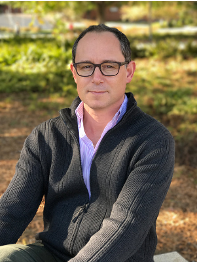
Emanuele Di Lorenzo is Professor and Founding Director of the Program in Ocean Science & Engineering at the Georgia Institute of Technology, and Chairman and Co-Founder of Ocean Visions. He obtained a BS in Marine Environmental Science in 1997 from University of Bologna, a Ph.D. in 2003 from the Scripps Institution of Oceanography and conducted postdoctoral work at University of California Los Angeles from 2003-2004. He is recognized as a world expert in large and regional-scale Pacific Ocean dynamics and climate. Throughout his career he has served in several leadership role for international organizations such as CLIVAR, US CLIVAR, PICES, and ICES, where he led transdisciplinary efforts to understand the impacts of climate on marine and social-ecological systems. In 2019, through a multi-institutional agreement between Georgia Tech, Stanford, MIT, Scripps, WHOI, Smithsonian, MBARI, UGA, Monterey Bay Aquarium and Georgia Aquarium, Di Lorenzo established the Ocean Visions (www.oceanvisions.org) — an effort to transform and accelerate the transfer of science and engineering into solutions for the ocean grand challenges. More recently Di Lorenzo has led the establishment of the Global Ecosystem for Ocean Solutions (GEOS) Programme under the United Nations Decade for Ocean Sustainable Development. Ocean Visions, Catalyzing Solutions for Ocean Health
Abstract: |
|
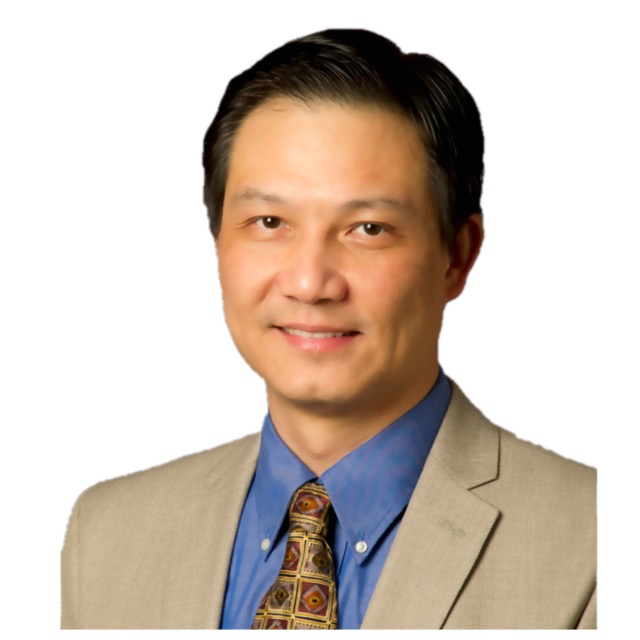
Jian Lin led and engaged extensively in international ocean sciences as a Senior Scientist at the Woods Hole Oceanographic Institution (WHOI), a faculty member of the Massachusetts Institute of Technology (MIT)/WHOI Joint Program in Oceanography, and a Distinguished Research Fellow of the South China Sea Institute of Oceanology, Chinese Academy of Sciences. He was elected a Fellow of American Geophysical Union (AGU); Fellow of Geological Society of America (GSA); Fellow of American Association for the Advancement of Science (AAAS); Henry Bigelow Chair Award for Excellence in Oceanography; and Culpeper Young Scientist Award. Prof. Lin is a leading scientist in global oceanic plate tectonics and dynamics, pioneering influential research on mid-ocean ridges, hotspots, subduction zones, and tsunamis. He led as chief-scientist and geophysicist in more than twenty international oceanographic expeditions to the Pacific, Indian, and Atlantic oceans, as well as marginal seas, including four ocean drilling expeditions in the South China Sea; the first high-resolution seismic experiment across the deepest ocean basin – Challenger Deep of the Mariana Trench; discovery of the first hydrothermal vent systems on the southwest Indian Ridge; and multi-disciplinary study of the Makran Trench in the northern Indian ocean. Prof. Lin is also known for his influential work on earthquake interaction, and served on the U.S. National Academy of Sciences committee on tsunami warning system. One of his earthquake research papers was ranked by the Institute of Scientific Information (ISI) as the most-cited paper in a decade. International Frontiers in Ocean Sciences and the Critical Role of Shenzhen in Ocean Technology Innovations
Abstract: |
|
Dr. Xu is presently a QIUSHI Honored professor in the Ocean College and College of Information Science and Electronic Engineering, Zhejiang University. He received the B.E. degree from the University of Science and Technology of China in 1990, M.S. degree from the Institute of Acoustics, Chinese Academy of Sciences in 1993, and Ph.D. degree from the Massachusetts Institute of Technology (MIT) in 2001. From 1993 to 1996, he was a research engineer with the Institute of Acoustics, Chinese Academy of Sciences. He was with the Ocean Acoustics Group, MIT, as a research scientist from 2001 to 2002, and with the Teledyne RD Instruments as a research scientist/senior research scientist from 2003 to 2007. His research has concerned statistical and array signal processing in general and in applications to sonar, radar, and communication systems, and most recently to underwater sensor networks. He is an associate editor of the IEEE Journal of Oceanic Engineering and an editorial board member of the Chinese Journal of Acoustics. Networks of Unmanned Underwater Vehicles: Results from the 2020 South China Sea Experimen
Abstract: |
|
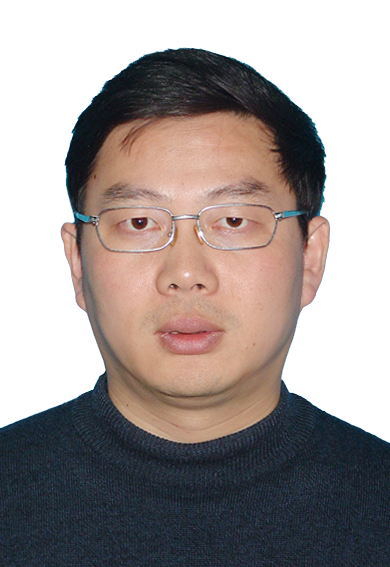
Dr. Li Ma is a researcher and chief scientist in the Institute of Acoustics of the Chinese Academy of Sciences. He is also a director of Key Laboratory of Underwater Acoustic Environment, Institute of Acoustics, Chinese Academy of Sciences. His research interests include sound propagation and scattering, acoustic characteristics of bottom sediment, parameter inverse of acoustic media, characteristics of internal waves, acoustic fluctuation. He received the B.S. and M.S. degrees from the Nanjing University and Harbin Engineering University in 1989 and 1992, respectively. He received a PhD degree in 1996 from the Institute of Acoustics of the Chinese Academy of Sciences. Research work on more than 60 projects including national defense pre-research and the National Natural Science Foundation of China. He completed the design of the overall framework for the theoretical research of underwater acoustic environmental characteristics, and has his own unique insights in the research of propagation, reverberation, noise and submarine internal waves. He completed the overall design of the theoretical and experimental research on the characteristics of the low-frequency ocean sound background field. The background field characteristics of low-frequency reverberation and low-frequency noise were systematically studied for the first time in China, and the low-frequency background field characteristics adaptation processing scheme was first proposed. He put forward the theoretical method of underwater image transmission and underwater voice communication networking, which lays the foundation for the construction of underwater information transmission network. In China, it is the first to use vertical array constant beam width technology and flexible array and optical fiber transmission technology to realize underwater Large-depth target characteristic measurement has made outstanding contributions to the technological development of related fields. Covert Underwater Acoustic Communication: Design and experiment results
Abstract: |
WUWNet’21 Plenary Speakers
|
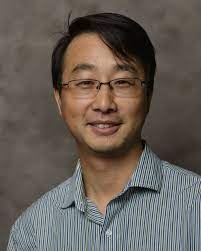
Aijun Song is currently an Associate Professor with the Department of Electrical and Computer engineering, University of Alabama, Tuscaloosa, AL, USA. He received a Ph.D. degree in electrical engineering from the University of Delaware, Newark, DE, USA, in 2005. From 2005 to 2008, he was a Postdoctoral Research Associate with the College of Earth, Ocean, and Environment, University of Delaware. During this period, he was also an Office of Naval Research (ONR) Postdoctoral Fellow, supported by the Special Research Award in the ONR Ocean Acoustics program. He was a Research Professor with the University of Delaware from 2008 to 2015. His current research interests include digital communications and signal processing techniques for radio-frequency and underwater acoustic channels, ocean acoustics, sensor networks, and ocean monitoring and exploration. He served as the General Co-Chair of the 2018 March NSF Workshop on Underwater Wireless Communications and Networking and the 2018 November NSF Workshop on Underwater Wireless Infrastructure. He was the General Co-Chair of the 14th International Conference on Underwater Networks & Systems. He is a recent recipient of the NSF CAREER Award (2021). Mobile Underwater Sensor Networks: Challenges and Opportunities
Abstract: |
|
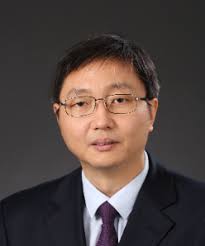
Jintao Wang has worked in the Department of Electronic Engineering at Tsinghua University since 2006. Now he is a full Professor and Ph.D. Supervisor. He is the Fellow of IET and Chinese Institute of Electronics. He is also the Senior Member of IEEE. He has published more than 180 journal and conference papers and holds more than 50 national invention patents. His current research interests include digital multimedia broadcasting, wireless broadband communication, underwater communication, and AI enhanced communication systems. Underwater Visible Light Communication
Abstract: |
|
Fengzhong Qu received his B.S. and M.S. degrees from Zhejiang University, Hangzhou, China, in 2002 and 2005, respectively, both in electrical engineering. He received the Ph.D. degree in electrical and computer engineering from the Department of Electrical and Computer Engineering, University of Florida, Gainesville, FL, USA, in 2009. From 2009 to 2010, he was an Adjunct Research Scholar in the Department of Electrical and Computer Engineering, University of Florida. Since 2011, he has been with the Ocean College, Zhejiang University, Zhoushan, China, where he is currently a professor and the Chair of the Institute of Ocean Sensing and Networking. His current research interests include underwater acoustic communications and networking, underwater positioning, and signal processing. He is an associate editor of the IEEE Transactions on Intelligent Transportation Systems, the IET Communications and China Communications. New Concept Biomimetic Stingray-like AUV: Autonomous Underwater Helicopter
Abstract: |
Panel
|
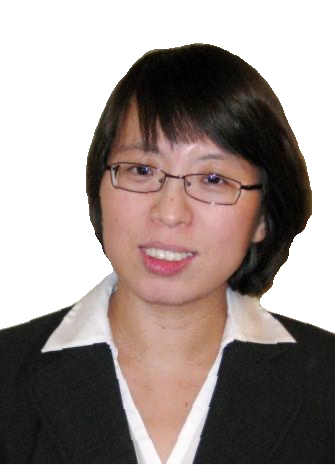
Dr. Jun-Hong Cui received her Ph.D. degree in Computer Science from UCLA in 2003. Currently, she is a Full Professor in the College of Computer Science and Technology, Jilin University, China. From Aug. 2003 to Aug. 2017, she was on faculty in the Computer Science and Engineering Department at University of Connecticut (UConn). She also served as the Assistant Dean for Graduate Studies and Diversity of School of Engineering at UConn from 2009-2012. At UConn, Jun-Hong founded and is leading the interdisciplinary UnderWater Sensor Network Lab, which involves more than 30 faculty members from eight departments across two schools. From 2012 to 2014, she led the efforts to launch an NSF I/UCRC (Industry/University Cooperative Research Center) for Smart Ocean Technology, in collaboration with University of Washington. In the research community, Jun-Hong co-founded the first ACM International Workshop on UnderWater Networks (WUWNet'06), which now has become a stand-alone premium conference in the area. She has been serving as the WUWNet steering committee chair. Jun-Hong received 2007 NSF CAREER Award and 2008 ONR Young Investigator Award. She also received the United Technologies Corporation (UTC) Professorship in Engineering Innovation award at UConn in 2008 and UCLA Engineering Distinguished Young Alumnus Award in 2010. She received Outstanding Junior Faculty Mentoring Award, School of Engineering UConn in 2013 and became an elected CASE (Connecticut Academy of Science and Engineering) member in 2014. Starting from 2016, Dr. Cui joined Jilin University as a Special Expert for the China 1000 Talent Program (selected in 2015) and founded the first Smart Ocean Research Center in China. |
|
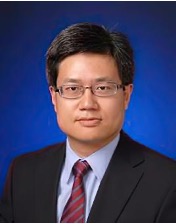
Dr. Li Ya, born in 1974, is the director of marine geotechnology in the research institute of Tsinghua University in Shenzhen and also the founder and CEO of Shenzhen Prime Ocean Technology Inc. As a renowned offshore geotechnical expert, Dr. Li was elected to the Technical Committee of Offshore Geotechnical Engineering for both ISO and API. Dr. Li has been actively involved in the production and research activities of frontier offshore geotechnical engineering since 2003. He has worked for Fugro, Arup and Technip, and CNOOC, presiding over the geotechnical planning and design implementation for a series of large-scale offshore development projects across the world. He was a research professor of Southern University of Science and Technology just before the current position. Dr. Li’s interest is to develop and renovate the offshore geotechnical system ranging from data acquisition, interpretation, integration to implement to support the offshore energy and resource development including oil and gas, offshore wind, gas hydrate, seabed carbon storage and etc. Dr. Li is the author of numerous academic papers and patents, and has also delivered keynote speeches on numerous technical forums. |