|
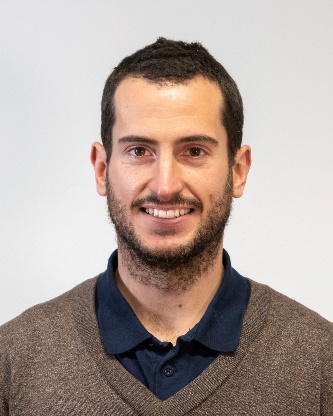
Prof. Ryan Kastner
Talk: Democratizing Underwater Sensing Systems
Ryan Kastner is a professor in the Department of Computer Science and Engineering at UC San Diego, where he holds the William Nachbar Endowed Chair. He received his Ph.D. in Computer Science (2002) from UCLA, and Bachelor's degrees in Electrical Engineering and Computer Engineering (1999) from Northwestern University. Professor Kastner leads the Kastner Research Group, whose research interests span hardware acceleration, hardware security, and remote sensing. He is a founding director of the Engineers for Exploration (E4E) program, which partners with archaeologists, biologists, ecologists, and marine scientists to develop embedded computing systems that advance scientific research. E4E technologies have been featured in National Geographic documentaries and have involved hundreds of undergraduates over the past decade. He is also a founding director of the Wireless Embedded Systems Graduate Program and co‑founder of Cycuity, a hardware security verification company. He is an IEEE Fellow, an Alexander von Humboldt Research Fellow, and recipient of the 2025 CRA Undergraduate Research Faculty Mentoring Award.
|
|
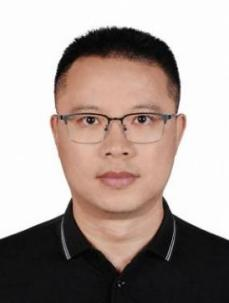
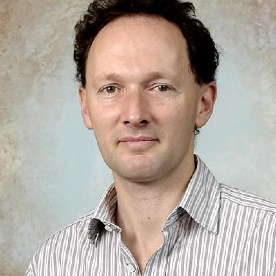
Prof. Jonathan Bull
Talk: Water Column Measurement, Monitoring and Verification for Carbon Capture and Storage Complexes
Professor Jonathan Bull is based at the National Oceanography Centre Southampton, University of Southampton, U.K. He uses passive and active acoustics to understand the environment both within the water column and beneath the seabed. His work is characterized by the leadership of large projects which has included: the development of machine learning algorithms to analyze acoustic sources; the design, build and application of high-resolution 3D seismic systems (3D Chirp); the development of new active acoustic systems to monitor carbon capture and storage complexes. He has developed a broad understanding of the propagation of the acoustic wave field through the water column and the sub-seabed from numerous projects in regions as diverse as Bangladeshi rivers, offshore New Zealand, the central Indian Ocean, the northern North Sea. Currently he is working on acoustic systems to detect gas flux emissions across the seabed, including from new carbon capture and storage complexes. Another major focus is on real-time detection of acoustic sources in the water column utilizing linear hydrophone arrays on the seabed, connection to a surface buoy, and communication to shore stations.
|
|
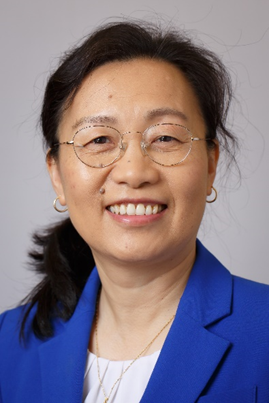
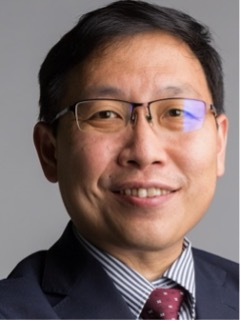
Prof. Woon-Seng Gan
Talk: Spatial Audio Intelligence: Sound Event Localization and Detection
Woon-Seng Gan is a Full Professor of Audio Engineering and Director of the Smart Nation TRANS (national) Lab in the School of Electrical and Electronic Engineering at Nanyang Technological University, Singapore. He received his BEng (1st Class Hons) and Ph.D. degrees, both in Electrical and Electronic Engineering from the University of Strathclyde, the UK in 1989 and 1993, respectively. He has held several leadership positions at Nanyang Technological University, including serving as the Head of the Information Engineering Division from 2011 to 2014, and as the Director of the Centre for Info-comm Technology from 2016 to 2019. His research has been concerned with the connections between the physical world, signal processing, and sound control, which resulted in the practical demonstration and licensing of spatial audio algorithms, directional sound beams, and active noise control for headphones and open windows. He has published more than 400 international refereed journals and conference papers, co-authored three books, and has translated his research into 6 granted US patents. He is a Fellow of the Audio Engineering Society (AES); a Fellow of the Institute of Engineering and Technology (IET); and elected as the IEEE Signal Processing Society Distinguished Lecturer. He served as an Associate Editor of the IEEE/ACM Transaction on Audio, Speech, and Language Processing (TASLP; 2012-15); Senior Area Editor of the IEEE Signal Processing Letters (SPL, 2019-24); and serving as the Associate Technical Editor of the Journal of Audio Engineering Society (JAES; 2013-); Senior Editorial member of the Asia Pacific Signal and Information Processing Association Transaction on Signal and Information Processing (ATSIP; 2011-). He is also elected as a member of the prestigious IEEE Audio and Acoustic Signal Processing technical committee to drive audio /acoustic activities in the IEEE signal processing community. He is currently the President of the Asia Pacific Signal and Information Processing Association (APSIPA).
|